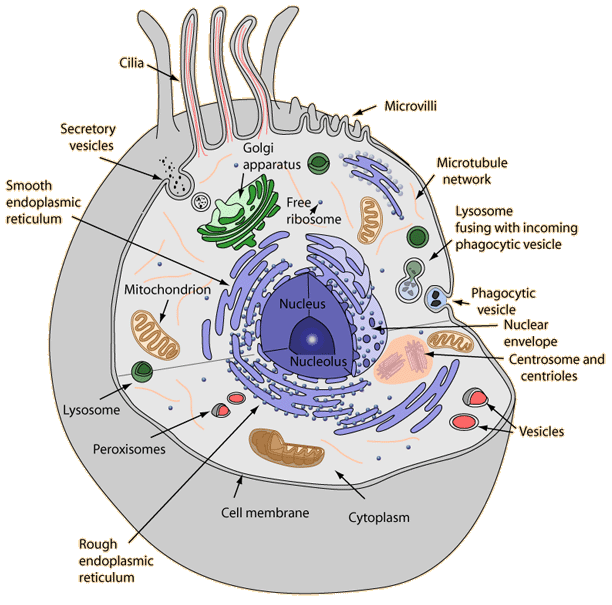
Animal Cell Structure:
Functions:
Nucleus= Contains DNA coding for proteins (DNA+histone proteins=chromatin).
Nucleolus= Involved in the production of ribosomes.
Nuclear Envelope= Allows exchange between the cytoplasm and nucleus (e.g mRNA).
Rough Endoplasmic Reticulum (RER)= Processes proteins and packages into vesicles.
Smooth Endoplasmic Reticulum (SER)= Production of lipids,cholesterol and steroid hormones.
Golgi Apparatus= Collects products from the ER (in vesicles) processes and packages.
Ribosomes= Site of protein synthesis from mRNA.
Mitochondria= Involved in the final stages of aerobic respiration to produce ATP.
Lysosomes= Contains digestive/hydrolytic enzymes which digest macromolecules.
Plasma membrane= Allows for a unique environment within the cell (By controlling flow).
Centrioles= 2 found just outside the nucleus at 90° of each other. Involved in nuclear division.
Flagella and Cillia= made out of microtubules. Involved in movement.
Cytoskeleton= Involved in transport of vesicles.
Plant Cell Structure:
Functions:
Does not contain centrioles
Chloroplasts= produces glucose by absorbing light energy (photosynthesis)